
Key takeaways
- Find a dehydrator machine that fits your batch size, tray layout and drying habits, with five Amazon options compared by capacity, controls and airflow.
What's inside
As an Amazon Associate I earn from qualifying purchases. This post may contain affiliate links at no extra cost to you.
A food dehydrator machine is not a casual impulse buy. It stays on the counter for hours at a time, takes up real storage space, and only earns its place if the trays, temperature range, and airflow match the food you actually dry. Buying too small means repeating batches all weekend. Buying too large means a heavy cabinet that rarely leaves the cupboard. A machine that dries unevenly also wastes food, time, and electricity, so the choice deserves more thought than a quick glance at tray numbers.
This guide is for home cooks who want a dedicated machine for regular drying, from fruit and vegetables to jerky and herbs. The five options below were selected from product names and specifications shown on Amazon, so you can compare tray counts, drying space, wattage, temperature control, and timers before choosing.
Quick Picks
As an Amazon Associate we earn from qualifying purchases
| Product | Best for | Key spec from title |
|---|---|---|
| COSORI Food Dehydrator, 10 Stainless Steel Trays | Very large batches in one run | 10 trays, 16.2 ft² drying space, 1000W |
| COSORI Food Dehydrator, 6 Stainless Steel Trays | A balanced cabinet machine for regular use | 6 trays, 6.5 ft² drying space, 600W |
| Magic Mill Food Dehydrator Machine, 10 Stainless Steel Trays | Large batches with a keep warm function | 10 stainless steel trays, digital timer and temperature control |
| Excalibur Electric Food Dehydrator Machine, 9-Tray | A wide, flat drying area for garden harvests | 9 trays, 15 square feet of drying space, 600 watts |
| NESCO FD-75A Snackmaster Pro Food Dehydrator | A compact stackable start for fruit and jerky | Adjustable thermostat from 95°F to 160°F |
How to Choose
Match tray area to your usual batch
Tray count alone does not tell you how much food fits. A machine with ten narrow trays can hold less than a machine with nine wide trays, so check the drying area listed in the title or specifications. If you dry a full tray of sliced apples or a family batch of jerky at once, a drying area around six square feet or more saves repeat runs. For occasional snacks, a smaller stackable model is easier to store and quicker to set up.
Look at airflow before tray count
Rear-mounted or horizontal airflow moves warm air across each tray more evenly than a fan sitting only at the base. That matters when trays are fully loaded, because the middle and back trays can otherwise dry more slowly. Cabinet models with a rear fan usually need less tray rotation. Stackable models rely on air rising through the centre, so even slicing and leaving small gaps between pieces helps the warm air reach every layer. Thick slices near the fan can also dry faster than pieces tucked at the edges, so spreading food in one even layer matters on every tray.
Check the temperature range and timer together
Different foods need different heat. Herbs dry best at low temperatures, fruit and vegetables sit in the middle, and jerky needs higher heat for safe drying. A range from around 95°F to 165°F covers most home uses, while a wider ceiling gives more room for meat. A timer with automatic shutoff is just as important, because drying often takes eight hours or longer and you do not want to watch the machine all day. If you often switch between herbs and meat, look for controls that move in small steps rather than a single dial with vague low, medium, and high marks.
Think about where the machine will live
Measure the counter, the cupboard shelf, and the space in front of a front-opening door before ordering. Cabinet dehydrators need clearance to pull trays out, while stackable models need height for the lid and extra trays. Weight matters too: a machine over twenty pounds is awkward to lift down from a high shelf. Dishwasher-safe trays, a mesh screen, and a fruit roll sheet also reduce cleanup after sticky fruit or marinated meat. Also check the cord length and outlet position, because a dehydrator that must sit across a walkway or under a low shelf becomes a nuisance during long runs.
The 5 Best Options
COSORI Food Dehydrator, 10 Stainless Steel Trays
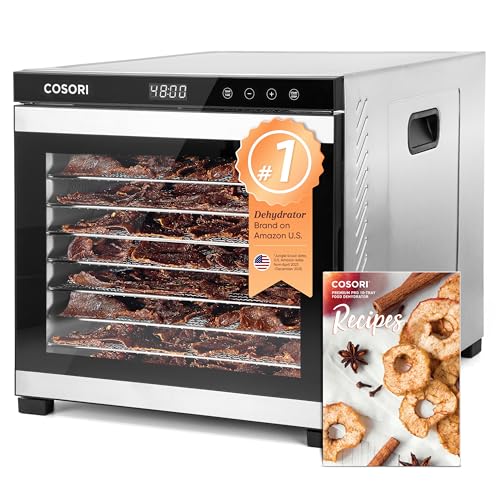
This is the machine to consider when large batches are the norm rather than the exception. Ten stainless steel trays and a wide drying area let you load several kinds of food at once, while the touch controls and long timer suit drying runs that continue overnight. The glass door and interior layout make it easier to check progress without opening the machine and losing warm air. That space also lets you dry a full tray of sliced fruit while jerky finishes on another level, instead of waiting for one batch to end.
Specs
- 10 stainless steel trays
- 16.2 ft² drying space
- 1000W
- Temperature control from 95°F to 165°F
- 48-hour timer
- Includes 1 mesh screen and 1 fruit roll sheet
Best for: Households that dry large batches of fruit, jerky, herbs, and vegetables in a single run.
Watch out for: The unit is heavy and tall, so confirm counter space, storage height, and a safe lifting route before ordering.
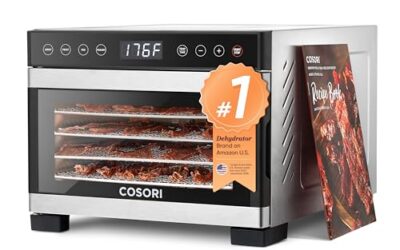
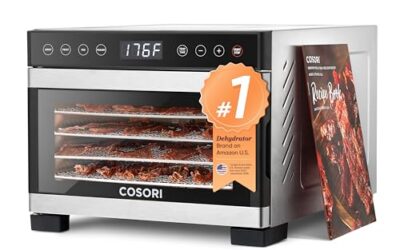
COSORI Food Dehydrator, 6 Stainless Steel Trays

The six-tray COSORI keeps the cabinet layout and rear airflow of its larger sibling in a more manageable size. Six stainless steel trays still handle a useful batch of apple rings, vegetable chips, or jerky strips, and the digital controls let you set temperature and time without guessing. It suits a kitchen where the dehydrator is used weekly but does not need to feed a large household every time. It also leaves enough room on the counter for a cutting board, so you can slice the next tray while the first one dries.
Specs
- 6 stainless steel trays
- 6.5 ft² drying space
- 600W
- Temperature control from 95°F to 165°F
- 48-hour timer
- Includes 1 mesh screen and 1 fruit roll sheet
Best for: Regular home drying with a cabinet machine that is easier to move and store than a ten-tray model.
Watch out for: Thick jerky or large fruit slices may need more time or a second batch when all six trays are fully loaded.
Magic Mill Food Dehydrator Machine, 10 Stainless Steel Trays

Magic Mill pairs ten stainless steel trays with a rear-mounted fan, digital controls, and a keep warm function, which makes it a practical choice for long drying days. The transparent door window lets you watch fruit or jerky without opening the cabinet, and the included fruit roll trays and hanging rack add options for leather and jerky. It is built for cooks who plan a full drying session rather than a single small tray.
Specs
- 10 stainless steel trays
- Digital adjustable timer and temperature control
- Keep warm function
- Rear-mounted drying fan
- Includes fruit roll trays and hanging rack for jerky
- For jerky, herbs, meat, beef, fruit, and vegetables
Best for: Long drying sessions where you want to load once, set the timer, and keep finished food warm.
Watch out for: The cabinet footprint is wide, so measure the counter depth and leave room for the door to open fully.
Excalibur Electric Food Dehydrator Machine, 9-Tray
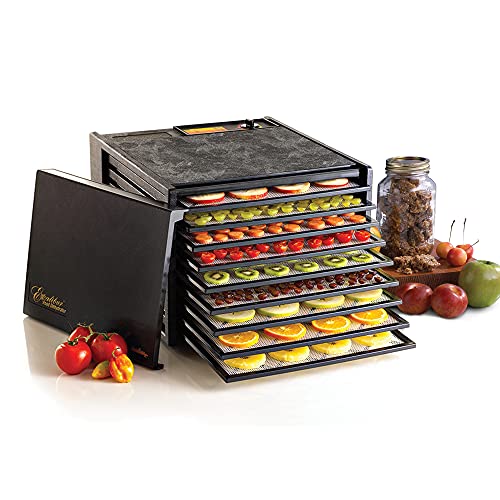
Excalibur has long been associated with wide, square trays, and the 3900B follows that pattern. Nine trays provide a broad, flat drying surface that suits garden produce, large leaves, and long jerky strips that do not fit well in round stackable models. The adjustable thermostat covers herbs through to jerky, and the horizontal airflow design is intended to dry every tray without rotation. The square shape also makes it easy to line trays with mesh sheets for small herbs and berries.
Specs
- 9 trays
- 15 square feet of drying space
- 600 watts
- Adjustable thermostat from 105°F to 165°F
- Item model number 3900B
- Includes guide to dehydration
Best for: Gardeners and preservers who dry wide trays of produce, herbs, and jerky in large seasonal batches.
Watch out for: This model has no built-in timer listed, so plan to use a separate timer or check the food at set intervals.
NESCO FD-75A Snackmaster Pro Food Dehydrator

The NESCO FD-75A is a stackable alternative for buyers who want a simpler, lighter machine. Its round trays suit sliced fruit, vegetables, and jerky, and the adjustable thermostat lets you move from delicate herbs to meat without changing machines. The compact shape stores easily in a cupboard, which makes it a sensible first dehydrator for a small kitchen. It is also light enough to carry to a table for loading, which helps when the kitchen counter is already crowded.
Specs
- Snackmaster Pro Food Dehydrator
- For snacks, fruit, and beef jerky
- Adjustable thermostat from 95°F to 160°F
- 5 trays
- Expandable tray system
Best for: Beginners and small households trying home drying without committing to a large cabinet machine.
Watch out for: Stackable trays dry from the bottom up, so check lower trays earlier and rotate them if the top trays lag behind.
Which One Fits Your Situation
You dry big batches every week
Choose the COSORI 10-tray model. Its ten trays, wide drying area, and 1000W rating are built for volume, and the long timer supports overnight runs. The stainless steel trays also handle repeated washing after frequent use, which matters when the machine rarely gets a rest. That capacity also helps when you dry different foods together, since you can keep flavours separate instead of mixing batches.
You want a cabinet machine without the largest footprint
Choose the COSORI 6-tray model. It keeps the same style of digital control and rear airflow in a smaller cabinet, with enough space for a family batch of fruit or jerky. It is easier to store, easier to lift, and still leaves room for a mesh screen and fruit roll sheet.
You preserve a garden harvest in season
Choose the Excalibur 3900B. Its nine wide trays and fifteen square feet of drying space suit large, flat loads of sliced vegetables, fruit, and herbs. The broad trays also make it simple to spread food in a single layer, which helps even drying. You can spread sliced courgettes, tomatoes, and herbs across separate trays and dry them together without crowding any single layer.
You are starting small and want a simple setup
Choose the NESCO FD-75A. The stackable design, adjustable thermostat, and compact storage make it easy to learn the basics. Start with fruit and vegetables, then try jerky once you are comfortable with slicing thickness and drying times. The round trays are easy to wash by hand, and the whole unit nests away neatly when you are not drying.
Common Mistakes
- Choosing by tray count alone without checking the actual drying area per tray.
- Slicing food unevenly, so thin pieces turn brittle while thick pieces stay damp in the centre.
- Overloading trays until air cannot move between pieces, which slows drying and risks spoilage.
- Skipping the mesh screen for small foods such as herbs, berries, or diced vegetables that fall through tray gaps.
- Storing food before it has cooled and been checked for remaining moisture, which can lead to mould in sealed jars.
Frequently Asked Questions
How many trays do I need in a food dehydrator machine?
It depends on your usual batch. Five trays suit snacks for one or two people, six to nine trays suit a family batch, and ten trays suit large or frequent drying. Check drying area as well as tray count, because wide trays hold more than narrow ones even when the counts look similar.
What temperature should I use for jerky?
Jerky needs higher heat than fruit or herbs, and the models in this guide list ceilings from 160°F to 165°F. Use the temperature range shown on your chosen model, slice meat evenly, and follow a trusted food safety guide for drying meat. Do not rely on appearance alone to judge whether jerky is ready.
Do cabinet dehydrators dry more evenly than stackable models?
Cabinet models with a rear fan usually distribute warm air across trays more evenly, which reduces the need to rotate trays. Stackable models can still dry well, but they depend on air rising through the stack, so even slicing and occasional tray checks help. Load trays in a single layer either way.
How do I clean a food dehydrator after use?
Remove the trays and wash them according to the product instructions, since many stainless steel trays are dishwasher safe. Wipe the cabinet interior with a damp cloth once it has cooled, and clean mesh screens and fruit roll sheets promptly so sticky residue does not harden. Dry every part fully before storing.
Related guides
More from Amazon
Programs that pair well with the guide above. Offers and eligibility are set by Amazon and may change.
Free shipping on eligible items, Prime Video and more. Eligible new members can start with a free trial.
Start a Prime free trialAudiobooks and podcasts to listen to on the go. Eligible new members can start with a free trial.
Try Audible freeAd-free music streaming. Eligible new subscribers can start with a free trial.
Try Music Unlimited freeA free business account with business pricing and bulk-buying tools for work, shop or home office.
Create a business accountAs an Amazon Associate we earn from qualifying purchases.
Write Your Review
No reviews yet. Be the first to share your experience!