
Key takeaways
- Compare five food dehydrators using checkable criteria like even heat, noise, cleaning and tray quality, with real Amazon specs and ASINs listed.
What's inside
As an Amazon Associate I earn from qualifying purchases. This post may contain affiliate links at no extra cost to you.
Buying a food dehydrator comes down to a practical question: which machine will dry a full load evenly, run without taking over the kitchen, and still be easy to wash afterwards. Tray count and wattage look simple on a listing, yet they say little about hot spots, sticky trays, or a fan that hums through the evening. A careful buyer needs details that can be checked before ordering, not a vague promise that one model beats another.
This guide is written for shoppers who search for independent buying advice and want to judge dehydrators for themselves. It does not reproduce or claim any ranking, score, or test result from Consumer Reports or any other organisation, and none is described as rated or recommended by them. Instead, each pick was chosen from names and specifications shown on its Amazon product page, and the criteria in this guide are things you can verify on the listing, in the manual, or by inspecting the trays when the box arrives.
Quick Picks
As an Amazon Associate we earn from qualifying purchases.
| Product | Best for | Key spec from title |
|---|---|---|
| Excalibur 3900B 9-Tray Electric Food Dehydrator | Drying large mixed loads in one session | 9 trays, 15 square feet of drying space, 600 watts |
| COSORI Food Dehydrator, 6 Stainless Steel Trays | A household that wants steel trays and a timer | 6 stainless steel trays, 600 watts, 48-hour timer |
| Magic Mill Pro Food Dehydrator, 7 XL Stainless Steel Trays | Jerky and fruit batches on wide steel trays | 7 XL stainless steel trays, 600-watt rear fan |
| NESCO FD-75A Snackmaster Pro Food Dehydrator | A first dehydrator that can grow with extra trays | 5 trays, expandable to 12, 600 watts |
| Hamilton Beach Digital Food Dehydrator 32100A | Simple digital control for fruit and jerky | 5 trays, adjustable temperature, 48-hour timer |
How to Choose
Check how even the heat really is
Even drying is the hardest quality to judge from a photograph, so look for the airflow design stated on the listing rather than a general claim. Rear-fan box models push warm air horizontally across each tray, which suits a full load of jerky strips or apple rings. Stacking models with a central fan move air up through the trays, and some listings state that no tray rotation is needed. Before buying, read the manual for the temperature range and check whether the thermostat is a dial or a digital control, because a dial makes it harder to repeat the same setting next time. Thin slices dry faster than thick ones, so uneven thickness will cause uneven results on any machine.
Listen for noise before it lives in your kitchen
A dehydrator often runs for eight hours or longer, so fan noise matters far more than it does for a blender used for two minutes. Listings rarely publish a decibel figure, which is exactly why this point needs a checkable approach. Look at the fan position and wattage, read the questions section on the product page for mentions of sound, and think about where the machine will sit during a long run. A unit beside a bedroom wall or an open-plan living area will be noticed all evening. If quiet matters, favour a model you can place in a utility room or garage, and confirm that its timer switches the machine off by itself.
Judge cleaning by the tray, not the marketing
Cleaning decides whether a dehydrator gets used twice a month or gathers dust after one sticky batch of mango. Stainless steel trays generally scrape clean more easily than plastic mesh, and flat trays are simpler to wash than trays with deep grooves. Check the listing for mesh screens and fruit roll sheets, because small items such as herbs and berries fall through wide gaps without them. Ask whether the trays are described as dishwasher safe, and look at how the door or lid comes apart. A box model with a removable door lets you wipe the interior, while a tall stack of trays needs a sink big enough to soak them.
Match tray quality and size to what you actually dry
Tray material and drying area shape every batch. Stainless steel trays hold their shape under heavy loads and resist staining from tomato or beetroot, while plastic trays are lighter and easier to lift when stacked high. Measure the counter space and the cupboard where the dehydrator will be stored, then compare it with the tray dimensions on the listing. A nine-tray cabinet dries a garden glut in one go, but it also needs a permanent home. For jerky, check the temperature ceiling on the listing, since meat needs a higher setting than herbs or fruit, and confirm that the trays are wide enough for full strips.
The 5 Best Options
Excalibur 3900B 9-Tray Electric Food Dehydrator
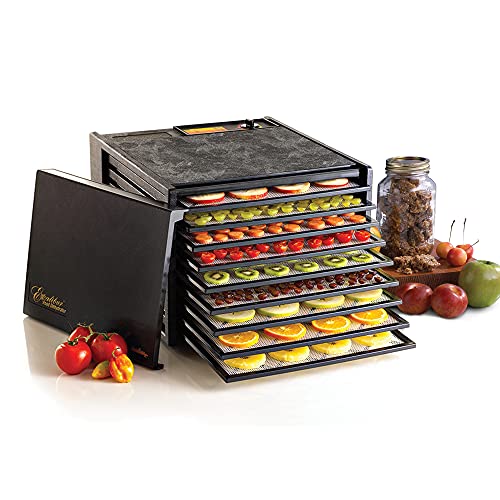
The Excalibur 3900B suits a household that dries in volume, whether that means a glut of garden tomatoes, a weekend of jerky, or trays of apple rings for lunchboxes. Its cabinet shape keeps every tray at the same level, so loading and checking a batch feels more like using an oven than unstacking a tower. Nine trays give room to dry several foods at once, and the adjustable thermostat lets the same machine handle delicate herbs and tougher meat strips. It is a large unit, so it fits best where it can stay on a counter or a sturdy shelf.
Specs
- 9 trays with 15 square feet of drying space
- 600 watts
- Adjustable thermostat
- Includes a guide to dehydration
Best for: Large mixed loads dried in a single session.
Watch out for: Measure your counter and storage space first, because a nine-tray cabinet is wide and tall compared with a stacking model.
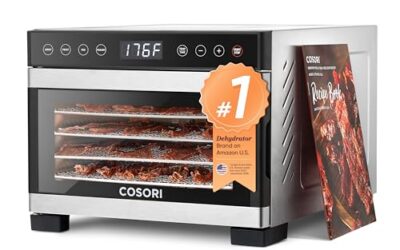
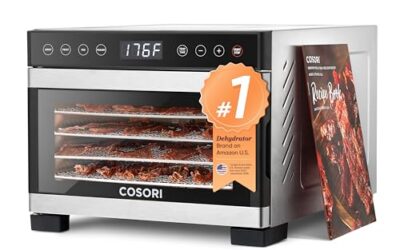
COSORI Food Dehydrator, 6 Stainless Steel Trays

The COSORI six-tray model fits a buyer who wants steel trays without stepping up to a full-size cabinet. Six trays hold a generous batch of fruit, vegetables, or jerky, and the stainless steel surface wipes down after sticky foods such as pineapple or marinated meat. A digital timer that runs for up to 48 hours means a long batch can finish overnight without attention, and the temperature control reaches 165 degrees Fahrenheit. It also works as a yogurt maker, which adds a second use for a household that already ferments at home.
Specs
- 6 stainless steel trays with 6.48 square feet of drying space
- 600 watts
- Temperature control up to 165 degrees Fahrenheit
- 48-hour timer
- Yogurt maker function
Best for: Households that want steel trays and set-and-forget timing.
Watch out for: Check the tray dimensions on the listing against your counter depth, and confirm whether fruit roll sheets are included or sold separately.
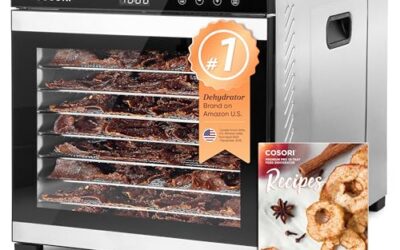
Magic Mill Pro Food Dehydrator, 7 XL Stainless Steel Trays
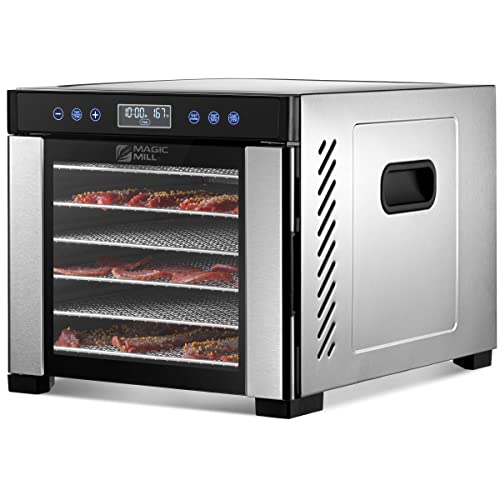
Magic Mill Pro appeals to cooks who dry jerky and fruit in regular batches and want wide trays that fit full strips without trimming. Seven extra-large stainless steel trays slide in and out of a front-opening cabinet, so checking the bottom tray does not mean lifting the whole stack. A rear-mounted fan moves warm air across every tray, and the keep-warm function holds finished food until it is packed away. Digital controls make it simple to repeat a temperature and time that worked well, which matters when a household settles on a favourite jerky or apple-chip routine.
Specs
- 7 XL stainless steel trays
- 600-watt rear fan even-drying system
- Digital timer and temperature control
- Keep-warm function
- ETL Approved
Best for: Jerky and fruit batches on wide, easy-to-clean steel trays.
Watch out for: The listing and the maker website have shown different top temperatures for similar Magic Mill models, so confirm the temperature range on the exact listing before ordering.
NESCO FD-75A Snackmaster Pro Food Dehydrator

NESCO FD-75A is a sensible first dehydrator for someone who wants to try drying food without committing to a cabinet machine. Five round trays stack on a compact base, and the stack can expand to twelve trays as batches grow. Its Converga-Flow airflow system is designed to move heated air across the trays without rotation, and the adjustable thermostat covers herbs at the low end and jerky at the high end. Fruit roll sheets, Clean-A-Screens, and a jerky seasoning sample are included, so a beginner can start with fruit leather and jerky straight away.
Specs
- 5 trays, expandable to 12 trays
- 600 watts
- Adjustable thermostat from 95 to 160 degrees Fahrenheit
- Converga-Flow airflow system
- Includes fruit roll sheets, Clean-A-Screens, and a jerky seasoning sample
Best for: A first dehydrator that can expand as batches grow.
Watch out for: Round trays have a centre hole, so check the usable drying area per tray and buy extra trays only after trying the five that come in the box.
Hamilton Beach Digital Food Dehydrator 32100A

Hamilton Beach 32100A suits a buyer who wants digital controls on a straightforward stacking dehydrator. Five trays handle a family batch of dried fruit or a modest run of jerky, and the digital thermostat replaces the guesswork of a plain dial. A 48-hour timer with automatic shutoff lets a batch run while the household gets on with other things, and the grey finish sits quietly on a worktop. It is a compact choice for a kitchen where a cabinet dehydrator would dominate the counter, and the trays stack neatly for storage between uses.
Specs
- 5 trays
- Adjustable temperature
- 48-hour timer with automatic shutoff
- Digital food dehydrator for fruit, jerky, and vegetables
Best for: Simple digital control for fruit and jerky in a compact stack.
Watch out for: Check whether mesh sheets and fruit roll sheets are included, because small or wet foods need them to stop pieces falling through the trays.
Which One Fits Your Situation
You dry a garden glut or a big jerky batch
Choose the Excalibur 3900B. Nine trays and 15 square feet of drying space let you load a large harvest or a full run of meat strips in one session, instead of drying in shifts across two days. The cabinet layout also makes it easy to check every tray without unstacking, which saves time when a batch is nearly done.
You want steel trays and a timer you can trust
Choose the COSORI six-tray model. Stainless steel trays are easy to wipe after sticky fruit, and the 48-hour timer with a 165-degree ceiling covers fruit, vegetables, jerky, and yogurt. It is a middle step between a small stacking unit and a full cabinet, and it suits a household that dries food most weeks.
You dry jerky often and hate trimming strips
Choose the Magic Mill Pro with seven XL trays. Wide trays fit full-length strips, the rear fan is designed to dry each tray evenly, and the keep-warm function holds a finished batch. Digital controls help you repeat the same settings, so a jerky routine becomes consistent rather than a fresh guess each time.
You are buying your first dehydrator
Choose the NESCO FD-75A. Five trays are enough to learn on, the stack expands to twelve if drying becomes a habit, and the included sheets and seasoning sample cover the first batches. Its compact round shape is also easier to store than a cabinet if the machine is only used a few times a month.
Common Mistakes
- Choosing by tray count alone without checking the drying area per tray, since round trays with a centre hole hold less than square trays of the same count.
- Ignoring fan noise and placement, then discovering that a long overnight run hums through a thin wall.
- Buying a cabinet dehydrator before measuring counter depth, cupboard height, and where the door swings open.
- Drying thick and thin slices together, which leaves some pieces damp while others turn brittle.
- Skipping mesh screens and fruit roll sheets, then losing herbs, berries, and purée through wide tray gaps.
Frequently Asked Questions
Does Consumer Reports rank the dehydrators in this guide?
No. This guide does not reproduce or claim any ranking, score, or test result from Consumer Reports or any other organisation. It compares five dehydrators using criteria you can check yourself, such as tray material, drying area, temperature control, timer length, and airflow design, with specifications taken from their Amazon product pages.
How can I check whether a dehydrator dries evenly?
Look at the airflow design on the listing first. Rear-fan models move air horizontally across trays, while stacking models push air up through them. Check the temperature control type, slice food to an even thickness, and spread pieces in a single layer with space between them so warm air can reach every piece.
Are stainless steel trays worth choosing over plastic?
Stainless steel trays usually hold their shape under heavy loads, resist staining, and wipe clean after sticky foods. Plastic trays are lighter and easier to lift in a tall stack, and many are described as dishwasher safe. The better choice depends on what you dry most and how much lifting and washing you want to do.
What temperature do I need for jerky?
Jerky needs a higher setting than fruit or herbs, so check the top of the temperature range on the listing before buying. The models in this guide list ceilings from 160 to 176 degrees Fahrenheit, depending on the model. Always follow current food safety guidance for heating meat, and confirm the finished jerky is dried through before storing it.
Related guides
More from Amazon
Programs that pair well with the guide above. Offers and eligibility are set by Amazon and may change.
Free shipping on eligible items, Prime Video and more. Eligible new members can start with a free trial.
Start a Prime free trialAudiobooks and podcasts to listen to on the go. Eligible new members can start with a free trial.
Try Audible freeAd-free music streaming. Eligible new subscribers can start with a free trial.
Try Music Unlimited freeA free business account with business pricing and bulk-buying tools for work, shop or home office.
Create a business accountAs an Amazon Associate we earn from qualifying purchases.




Write Your Review
No reviews yet. Be the first to share your experience!